
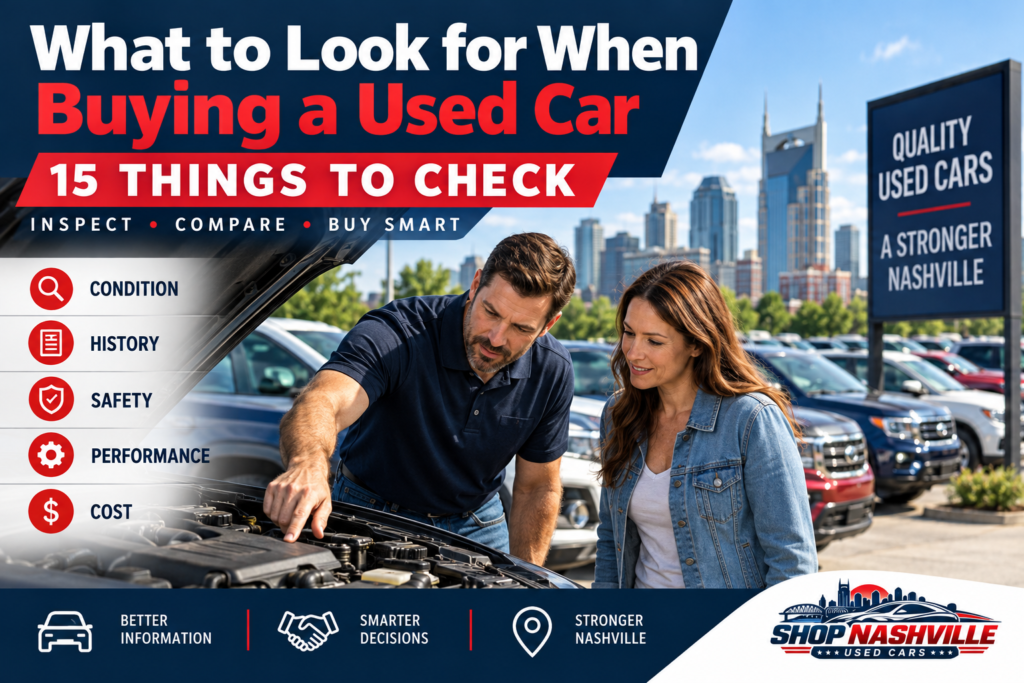
What to Look for When Buying a Used Car: 15 Things to Check
A used car can be a great value, but its condition matters just as much as its price. Before you buy, take time to inspect the vehicle, review its history, test its major systems, and understand exactly what you’re paying for.
You don’t have to be a mechanic to notice many potential problems. These 15 checks can help you evaluate a used vehicle and identify issues that deserve a closer look before you sign the paperwork.
1. Check the Vehicle History
Ask for the vehicle identification number (VIN) and review a vehicle history report before buying. The report may contain information about reported accidents, title history, previous owners, mileage records, or other events in the vehicle’s past.
A clean history report is useful, but it doesn’t guarantee that a vehicle has never been damaged or had mechanical problems. Think of it as one part of your research rather than a substitute for an inspection.
2. Look at the Overall Exterior Condition
Walk completely around the vehicle in good lighting. Look for dents, scratches, rust, cracked lights, damaged trim, and other visible problems.
Pay particular attention to differences in paint color or finish between body panels. Mismatched paint or unusual panel gaps don’t necessarily mean you should reject a vehicle, but they can be reasons to ask whether repairs have been made.
3. Check the Tires
Look at all four tires rather than checking only the ones that are easiest to see. Make sure they have adequate tread and inspect them for cracking, bulges, or other damage.
Uneven tire wear can sometimes indicate alignment, suspension, or maintenance issues. Also check whether the tires are reasonably well matched. Replacing four tires shortly after buying a car can add considerably to your ownership cost.
4. Look Under the Vehicle
Check the ground underneath the car and look underneath the engine area for signs of leaking fluids.
A small amount of water from the air-conditioning system can be normal. Oil, coolant, transmission fluid, or other automotive fluids deserve further investigation.
You don’t need to diagnose the leak yourself. If you see something suspicious, ask about it and consider having a mechanic inspect the vehicle.
5. Inspect Under the Hood
Even if you aren’t mechanically inclined, opening the hood can reveal useful information.
Look for obvious leaks, damaged hoses, loose wiring, corrosion, unusual modifications, or anything that appears neglected. Check accessible fluid levels and look at the general condition of the engine compartment.
A professional inspection is the better choice if anything concerns you.
6. Check the Interior Carefully
Spend some time inside the vehicle before the test drive.
Inspect the seats, carpet, dashboard, headliner, seat belts, and interior trim. Look for excessive wear, stains, water damage, unusual odors, or other signs that the vehicle may have had a harder life than its mileage suggests.
Make sure the seating position is comfortable and that you have good visibility.
7. Test the Electronics and Accessories
Turn on the vehicle and test as many features as possible.
Check the:
- Air conditioning and heater
- Power windows
- Power locks
- Mirrors
- Headlights
- Brake lights and turn signals
- Windshield wipers
- Backup camera
- Infotainment system
- Bluetooth
- USB ports
- Power seats
- Sunroof, if equipped
Electronic repairs can become expensive, particularly on newer vehicles with sophisticated technology.
8. Watch the Dashboard Warning Lights
When you first start the vehicle, dashboard warning lights normally illuminate briefly and then turn off.
Pay attention to warning lights that remain illuminated, including the check-engine, ABS, airbag, or other system warnings.
Don’t assume a warning light is something inexpensive to repair. Ask why it is illuminated and have the problem evaluated before purchasing the vehicle.
9. Check the Mileage
Compare the odometer reading with the vehicle’s age, condition, maintenance records, and vehicle history report.
Mileage alone doesn’t determine whether a used car is good or bad. A well-maintained higher-mileage vehicle can sometimes be a better purchase than a lower-mileage vehicle that has been neglected.
What matters is whether the mileage and overall condition make sense together.
10. Take a Thorough Test Drive
Don’t judge a vehicle from a quick trip around the parking lot.
If possible, drive on both city streets and a highway. Pay attention to how the vehicle starts, accelerates, shifts, steers, brakes, and rides.
Listen for unusual noises or vibrations. Make sure the vehicle tracks properly and that you’re comfortable with its visibility and driving position.
Turn the radio down during part of the drive so you can actually hear the vehicle.
11. Pay Attention to the Transmission
Whether the vehicle has an automatic or manual transmission, gear changes should feel appropriate for that particular vehicle.
Watch for excessive hesitation, slipping, unusually harsh shifts, unexpected noises, or other behavior that concerns you.
Transmission repairs can be expensive, so unusual behavior deserves further evaluation before you buy.
12. Test the Brakes
Find a safe place during your test drive to evaluate the brakes.
The vehicle should stop smoothly and predictably. Pay attention to grinding, squealing, excessive vibration, pulling to one side, or a brake pedal that feels unusual.
Normal wear items eventually need replacement, but you should know about them before agreeing on a price.
13. Consider a Pre-Purchase Inspection
One of the best ways to reduce uncertainty when buying a used car is to have an independent mechanic inspect it before the purchase.
A pre-purchase inspection may uncover mechanical problems, worn components, leaks, previous repairs, or maintenance needs that aren’t obvious during a test drive.
No inspection can guarantee that a vehicle will never need repairs, but knowing its current condition can help you make a more informed decision.
14. Understand the Warranty
Don’t assume a used vehicle includes warranty coverage.
Ask whether the vehicle is being sold with a dealer warranty, remaining manufacturer’s warranty, service contract, or on an as-is basis. If warranty coverage is offered, read the terms carefully and understand what is and isn’t covered.
If you’re considering purchasing a service contract, look at its cost, deductible, covered components, exclusions, and claim requirements before deciding whether it provides value for you.
15. Review the Final Numbers Before Signing
Before signing the purchase agreement, review the entire transaction—not just the monthly payment.
Confirm the:
- Vehicle selling price
- Trade-in allowance, if applicable
- Down payment
- Taxes
- Dealer and government fees
- Interest rate or financing charges
- Loan term
- Optional products
- Warranty or service-contract charges
- Total amount you will pay
If something on the paperwork doesn’t match what you expected, ask about it before signing.
A Used Car Doesn’t Have to Be Perfect
Most used vehicles will show some wear. The goal isn’t necessarily to find a car without a single flaw. The goal is to understand what you’re buying, what condition it’s in, and what it will really cost you.
A few cosmetic scratches may not matter to you. A serious mechanical problem, title issue, or financing arrangement you don’t understand is very different.
Taking your time, comparing vehicles, and asking questions can make a significant difference.
Find Used Car Dealers in Nashville & Middle Tennessee
If you’re ready to start shopping, use Shop Nashville Used Cars to browse used car dealerships throughout Nashville and Middle Tennessee.
Compare local dealerships, explore dealers by city, and find Buy Here Pay Here options available in the area.